My Production: Measure For Measure

"An Angelo for Claudio, death for death! Haste still pays haste, and leisure answers leisure; / Like doth quit like, and Measure still for Measure"
- William Shakespeare

Origins:
Image result for measure for measureThe play that I am currently working on as part of the BRIT School 2017 Shakespeare Season is Measure For Measure. The play is thought to have been written by William Shakespeare around 1604, but it was first published in 1623. It was first performed on December 26th, 1604 at The Court Of James. There is a theory that some people believe which is that the play text we have today is not the original, but a revision of the play arranged by Thomas Middleton. Measure For Measure isn't as well known as some of his plays but there have been some interesting modern interpretations.

Themes:

Image result for measure for measureIt is seen is a problem play that looks at many issues, some of which include power, justice, sex, religion, corruption and deceit. It has come to be known as a comedy, however, there are many dark moments in the play that make it seem more of a drama. In the play we see characters such as Angelo, taking advantage of the power given to him. Isabella struggles to do what is right in regard to her religion. Pompey Bum and Mistress Overdone help to look into the issues of sex in a city corrupt with brothels and crime. 

Plot:
Image result for measure for measureThe play is originally set in Vienna, where the Duke is about to leave Angelo in charge to see what becomes of the city under his power. Claudio had got Juliet pregnant out of wedlock, so Angelo ordered him to be executed as an example to others. His sister, Isabella, hears of this and pleads with Angelo to let her brother go free. Angelo is very attracted to Isabella and attempts to make a deal with her - he will let her brother go if she has sex with him. She immediately refuses as this will result in her not being able to be a part of the nunnery. A while later, the duke is disguised as a friar and convinces Isabella to agree to the plan as they can trick him into thinking he had sex with her. There is a big finale to the play where all is revealed and good is restored in the city of Vienna.

Character:
Image result for measure for measure claudioIn our production, I play the role of Claudio. The play surrounds the story of Claudio being sent to prison and put in line to be executed for getting his partner, Juliet, pregnant. We see many different thought processes and changes in the play beginning with anger at what has happened, changing into confusion about the situation and then upset at his sister and desperation to live. He is a very interesting character to play as a lot of his journey takes place off stage, so you have to think about what happens when he is not in scenes on the script.

Cheek By Jowl Production:
In April 2015, Cheek by Jowl, an international theatre company, put on a production of Measure For Measure at The Silk Street Theatre within The Barbican Centre. It was performed in Russian by the company's ensemble and looked at the unpredictability of the story. This would have been really interesting to watch as it is communicated in another language completely, with English subtitles to help audiences fully understand the text. The production was directed by Declan Donnellan and was nominated for many awards, opening to spectacular reviews, with critics calling it 'a shattering portrait of contemporary Russia' and 'a real thriller, piercing the heart of the entire audience'. The director had to use a translator to talk to the actors as he didn't speak fluent Russian - but he claimed that a performance was more about the body language and the words and silences between the text. The set was very dark with bright hints of red ('whores lipstick colour'), which always insinuates sin and love - two things that the play focus in on a lot. There is a lot of folk dancing and music which helps to set the scene in Russia. There was a very abstract set, using red boxes to turn and reveal different aspects and characters of the play. The characters who are not in a scene work as the ensemble to watch the piece, led by one of the prisoners - Barnadine. The play was described as a visual spectacle. It was very interesting watching clips of Claudio in this production as it was spoken in Russian but I could still follow it well. The scenes in this play felt a lot more intense, with armed officers and a big sign hanging around Claudio's neck. In this interpretation, Claudio had his hands up in surrender, showing his fearful side. I wish I had been able to watch this full production at The Barbican as it looked phenomenal!

Shakespeare Today

Hamlet
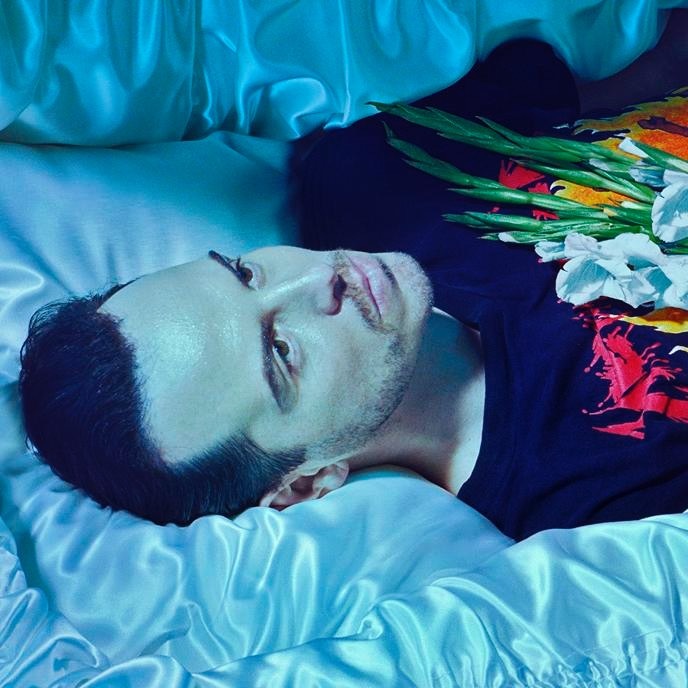
Related imageRecently, I was lucky enough to be selected to go and watch 'Hamlet' at The Almeida Theatre, where it has sold out its entire run. I hadn't read the play before and enjoyed it so much more than I thought I would, with the story being so compelling for all 3 hours and 45 minutes of it. The production had Andrew Scott playing the title role, who was phenomenal at portraying the journey of the character and the direction by Robert Icke was remarkable.The multimedia element to this production really enhanced the piece. There were many fantastic moments in the play because of this. For example, there was a transition with lots of police bursting into the room using torches to build up tension and excitement in the room. There were also television screens placed around the theatre to play news broadcasts and a live stream of certain character close-ups, during the 'play' Hamlet puts on. This was brilliant at showing us reactions to situations happening on stage and putting the performance into a modern context. Also, surveillance cameras projecting videos onto a giant screen showed us action that was happening offstage. This made the ghost scenes more believable and gave more depth to the piece. These cameras, lights and other uses of multimedia would not have been available during Elizabethan times, resulting in performances being a bit tamer and feeling slower with less things to focus in on.


Image result for twelfth night national theatreTwelfth Night
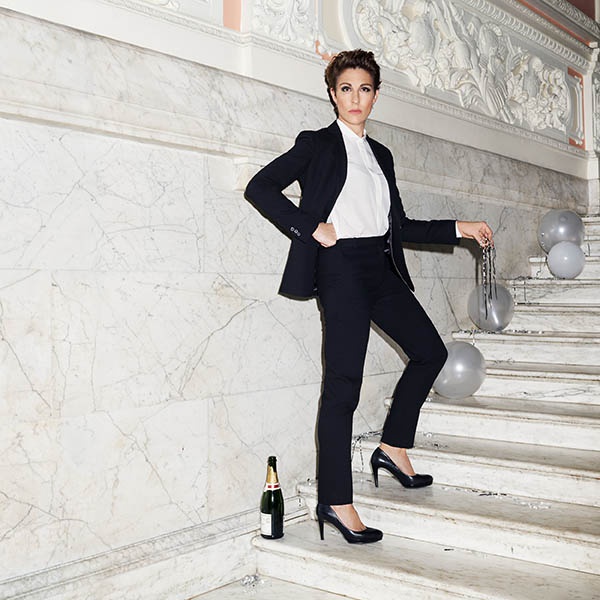
I was a bit reluctant to see this production of Twelfth Night at the National as I hadn't seen much Shakespeare before and find it hard to focus for long periods of time. However, I really enjoyed it and the time flew by without me noticing. The set was quite spectacular, with a giant revolving staircase to make transitions move smoothly and quickly. There was lots of music and bright neon lights for scenes such as the ones in the bar and party. The big twist on this production was that it was gender fluid, looking at issues in modern day society that were still around during Elizabethan times. When Shakespeare was first performed, males were acting in the productions as women were not allowed to perform. Tamsin Grieg portrayed the character of Malvolia, which is written as a man. This showed the advancement of equality between the sexes in current times, even though there is still a long way to go. Interpreting this gender fluid concept made the piece very current.

Brit Productions
Over the 3 years I have spent at BRIT, I have had the opportunity to see a variety of Shakespeare shows put on by year 12 theatre students. In previous years, I was able to see an all female cast perform Titus Andronicus and a version of Much Ado About Nothing set in the middle east. They both looked at current and modern issues that are around today. This years three productions are Richard III, Measure For Measure, Hamlet and Macbeth. They all had twists on them to make them more suitable and interesting for modern audiences. Richard III was set in Donald Trump's America, Measure For Measure looked at 1980's acid house raves, Hamlet focused on mental health and musicians who have committed suicide and Macbeth was an all female cast inspired by Pussy Riot.

Theatres, Actors And Acting In Shakespeare's Time

When Shakespeare plays first began being performed, there was less of a variety of venues to perform in. Today, modern entertainment can be performed outdoors, in theatres, studios and arenas - this is thanks to the advancement of technology. In Elizabethan times, the main two venues would have been playhouses and indoor theatres.

Playhouses:
With the rise of popularity among going to the theatre, business men were inclined to build playhouses and rent them to touring theatre companies. People often refer to outdoor playhouses as 'amphitheaters', but there were also indoor playhouses. 'The Red Lion' was the first playhouse to be built, by John Brayne in 1567. Following this, many other playhouses were built - the majority of them by the Southbank in London, a place that many citizens already attended for entertainment.

Outdoor playhouses tended to have an open roof, a raised stage with a roof over it and many layers of seating for audience members to watch from. This was a traditional style, like Shakespeare's Globe that we often visit today. These shows were to a large scale and were good for plays with big battle scenes as there was a lot of space to use. Shows are wonderful during summertime, but some people think that the experience can be ruined with bad weather. You didn't have to have a lot of money to attend these shows as there were yard standing tickets, which were cheaper than buying seated tickets.

Indoor playhouses are usually constructed to a smaller scale, more expensive as there are less tickets available and lit by candles and natural light from windows. The Sam Wanamaker playhouse is often used for performances and is a part of Shakespeare's Globe. Audience members who watched theatre indoors tended to be richer and more upper class. There was more expensive seating available for them, close to the actors. This type of theatre was used by 'boy companies', made up of teenagers and young adults who played once a week. Shows performed at indoor playhouses were a lot more intimate, with special effects and a variety of small props that wouldn't necessarily get noticed outdoors. Performances could be done all year round as this type of theatre wasn't weather dependant.

Performances:
There was generally very little scenery, if any, for performances during this time. Actors had to rely on their talent - a lot of the time, they were required to be able to sing, dance, act, fence or play instruments. Some of the work would have been quite physically tiring. There are many entrances and exits in these playhouses, which often help audience members to feel as though they are a part of the performances. Actors could also enter and exit from trapdoors or 'the heavens' above, to make transitions more interesting. The costumes that actors wore were quite modern to the time, making them look nice rather than giving an accurate representation of the character. For a large time, all of the casts were made up of males having to play different characters, including the female roles.

References:
www.ShakespearesGlobe.com/Discovery-Space/Fact-Sheets
www.ShakespearesGlobe.com/Uploads/Files/2014/01/Indoor_Theatres.pdf
ww.Folger.edu/Shakespeares-Theater

Shakespeare's London And Elizabethan Audiences

London:
During the Elizabethan period, the population in London was growing at a pace - some might have even called it an 'overcrowded city'. It was the richest and biggest city in the whole of England, so everyone wanted to migrate there - from the countryside and from abroad. Due to so many people wanting to move there, it was very dirty, noisy and crowded. There was a lot of punishment and execution, mainly beheading, due to lots of crime because of standards of living - poorer people had to steal to eat and survive. There was a large rise in the entertainment industry. New theaters were being built as more people were interested in going out and enjoying themselves, being social. Sports were very popular among men at the time, with lots of tournaments and festivals being held. Men were expected to be the breadwinners and women tended to stay at home as a housewife, looking after the children and home.

Audiences:
With a larger population - there were more industries on the rise, especially the entertainment industry. Due to the increase in jobs, people were earning more money - which meant they had the ability to go out and enjoy themselves. Entertainment in the Elizabethan time period included bear-baiting, cock-fighting among others. Around 20,000 people attended the theatre every week! The audiences were a wide variety of people - traditionally, more men visited the theatre to watch shows and all the actors were male too. Wealthier people tended to visit the theatre more often, but people from all backgrounds went too. The entry fee to stand at an open air theatre was around 1 penny - the same price as a loaf of bread at the time. You would have to pay double if you wanted to be seated. It cost about 6 pence to have a seat in a theatre indoors. So just like now, theatre was accessible to a lot of people - with a range of prices. Perhaps it was even more popular back then because it was slightly cheaper and something new for audiences to witness. Audiences would voice their reactions to things happening in a play by clapping, cheering and booing when they wanted to - not when it was appropriate too. This often led to fights breaking out among members of the audience.

References:
www.ShakespearesGlobe.com/Discovery-Space/Fact-Sheets
www.Elizabethan-Era.org.uk/Elizabethan-London.htm

Shakespeare's Life And Biography

"Be not afraid of greatness: some are born great, some achieve greatness, and some have greatness thrust upon them."
- William Shakespeare

Origins
It is hard to know many of the precise details surrounding the life of Shakespeare as there are many documents that still remain unfound as he was born over 400 years ago. William Shakespeare was born around April 1564 in Stratford-Upon-Avon - his parents John Shakespeare and Mary Arden were quite successful, so lack of money wasn't much of an issue for them. Two of his sisters died before he was born - but he did have 3 younger brothers and two younger sisters. He attended grammar school, where they were taught general things such as reading and writing - but also more in depth topics such as how to write in Latin. The course also consisted of writing and acting in Latin plays - memorisation activities were included as a part of this.

Family
When Shakespeare was only 18 years of age, he married Anne Hathaway - who was 26 years old at the time (1582). They had three children together; Susanna, and twins Hamnet and Judith. For the majority of their lives, Shakespeare's family living in Stratford - with William constantly travelling to London for his work. 

Work
Shakespeare is still known to be one of the greatest writers of all time. Many of his plays are still studied and performed all across the globe. In his lifetime, he wrote a total of 154 sonnets, around 38 plays and some other incredible texts. Some of his most famous plays are Romeo And Juliet (1597), A Midsummer Night's Dream (1600), Hamlet (1603) and Much Ado About Nothing (1623).

Death
Sadly, William Shakespeare died on April 23rd, 1616, of unknown causes. The average life expectancy was around 35, but he defied this and was alive until the age of 52. He is believed to have spent the most of the end of his life in Stratford-Upon-Avon and he remains buried beneath the Holy Trinity church there.

References:
www.ShakespearesGlobe.com
www.Folger.edu/Shakespeares-Life

Life In Elizabethan England

The Golden Age - Between 1558 and 1603, England witnessed a large change and increase of theatre, music and literature. It was also a time of expansion in England, with the spreading of the British Empire. At the time, English people were very proud of their country and everything it had become.

Population:
Eight years before the Elizabethan Period began, there was a total population of 2.9 million in England and Wales. However, by 1599 (four years before the end of the Elizabethan Period), there was now a total of 4.0 million people living in England and Wales. As you can see, there was a huge increase in the  population during the Elizabethan Period. The nobles made up around 3% of the population and 95% of the population lived in rural areas, but London was always seen to be the heart of England.

Religion:
Christianity was the religion that the majority of people followed during the time of Elizabethan England. However, at the time it was very divided between the Catholics and the Protestants. They both do similar things, but in different ways. 
Catholics - the Catholic churches were extremely decorated as a way of celebrating God. If you provided gifts to the church, they thought that Priests could forgive any sins that were committed. Services were performed in Latin.
Protestants - The Protestant churches were very plain so that everyone could focus on the words being spoken throughout the sermon. They thought that only God could forgive your sins. Services and the Bible was translated into English so that the people could understand it.

Superstition:
During the Elizabethan period, there was a lot of superstition amongst people that was heavily influenced from past beliefs. For example, a large amount of people believed in witchcraft and magic. These thoughts have carried on through today and are represented in stereotypical witches, who have pets, create potions and can fly. There were many other superstitions that have carried on through the generations (unlucky to walk under ladders or have a black cat cross paths with you). Many of these superstitions were strongly linked to religion at the time.

Money:
All coins in Elizabethan times were made from gold and silver and there wasn't any paper notes. Instead there were pounds (£), shillings (s) and pence (d). 12 pence made a shilling and 20 shillings made a pound. A Sovereign was worth 20 shillings, an Angel was worth 10 shillings and the Crown was worth 5 shillings. Half-A-Crown was worth 2 shillings 6 pence, A Sixpence was worth 6 pence, A Groat was worth 4 pence and A Farthing was only worth 1/4 of a pence. Lords, Merchants and Noblemen earned a lot more money than carpenters, labourers and farmworkers.

Medicine:
The Elizabethan period was a time full of plague and illness, with little knowledge about medicine and various remedies for pain relief. It was a very unhygienic time, in which you could easily contract diseases and infections - creating a very short life expectancy for many. Leaches were used to collect blood from the body as a so called cure for the plague. Some other remedies used at the time were alcohol, tobacco, toad and a variety of plants and herbs. The life expectancy was only 35 for the rich people and 25 for the lower class. 40% of people died before reaching adolescence due to such low standards of living.

Jobs:
There was a wide variety of jobs for people to have during the Elizabethan period - but many of them depended on how much money you had and which class you were a part of. There were many 'house jobs' such as being a cook, gardener or butler and other jobs were more involved in the arts, such as being an actor or an artist. Many of the male jobs included being watchmen, knights and squires. People also earned money as carpenters, candlemakers, blacksmiths and barbers. The nobility earned the most money, whilst town dwellers and servants earned less and the country folk earned the least.

Entertainment:
People carried out a variety of activities as forms of entertainment in Elizabethan times. Sport was very popular among men, including bowling, archery and jousting. Hunting was also popular with the people at the time. The upper class tended to enjoy dancing at events such as banquets and dinners. Jesters were people who were hired to entertain through comedy - the Queen was usually in the company of a Jester .  Many people also attended fairs and festivals to entertain themselves. The theatre was also becoming increasingly popular.

Theatre:
The entertainment industry was on the rise and it was during the Elizabethan time that there was a large advancement in the construction of theatres, venues and sites to perform in. Theatres tended to be very large and could usually hold up to a few thousand people. The most famous theatre built was in 1599 and named 'The Globe' - created specifically for Shakespeare's shows. Women were not allowed to perform in the theatre - so instead, males were made to play the female roles. Shows were generally performed in the afternoon so that the daylight could light up the stage and make everything more visible - as artificial light wasn't around at this time. The theatre had started becoming a huge phenomenon all across England and the rest of the world.

References:
www.BBC.co.uk/Programmes/p01d4279
www.ElizabethanEnglandLife
www.Elizabethan-Era.org.uk
www.EnglishHistory.net 
www.Encyclopedia.com
www.Elizabethan.org